

Key Points
- FuelEU Maritime is now operational, not aspirational
- Compliance costs are increasingly passed to cargo owners
- Overlapping EU and IMO regimes complicate planning
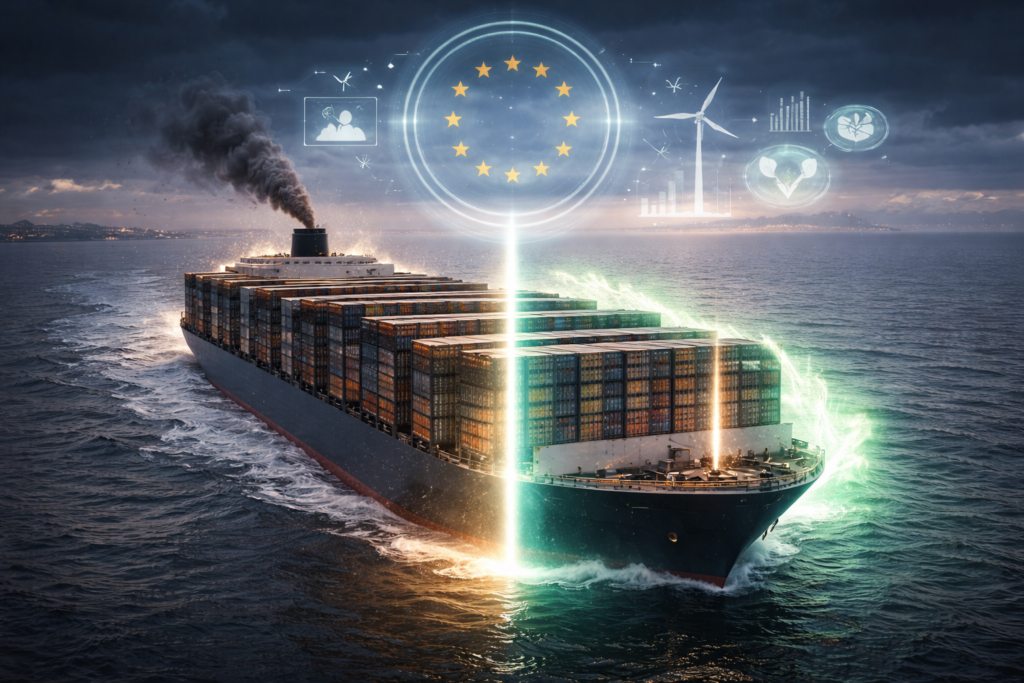
For years, maritime decarbonization was discussed largely in forward‑looking terms. In 2026, that discussion has shifted decisively from ambition to execution.
FuelEU Maritime, which entered into force in 2025, now directly affects voyage economics, freight contracts, and cost allocation across supply chains. Sustainability regulation is no longer a distant policy concern—it is embedded in the bill of lading.



From Policy to Penalty
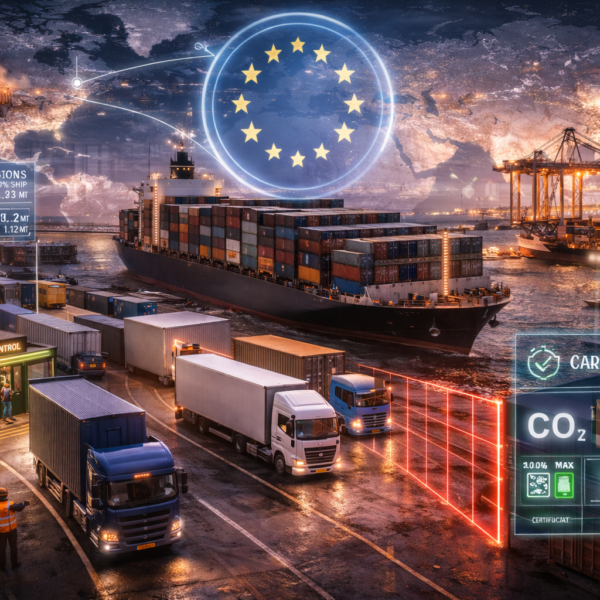
FuelEU Maritime mandates progressive reductions in the greenhouse‑gas intensity of energy used by vessels calling at EU ports, starting with a 2% reduction in 2025 and escalating sharply through 2030 and beyond (European Commission, 2025).
Non‑compliance carries financial penalties tied to energy consumption, creating a direct cost signal.
Cost Pass‑Through Becomes Visible
In practice, carriers are responding through:
- Sustainability surcharges
- Revised bunker adjustment mechanisms
- Carbon clauses in freight contracts
These costs are increasingly passed downstream, particularly on EU‑linked trade lanes.
For shippers, emissions compliance is now a commercial variable.
The Risk of Double Regulation
Complicating matters further is the IMO’s Net‑Zero framework, expected to enter force around 2027. While global in scope, it may overlap with FuelEU, raising concerns about double compliance and inconsistent incentives (Lloyd’s Register, 2025).
Uncertainty over alignment is already affecting investment decisions.
Industry Implications
For logistics and trade professionals:
- Contract negotiations must address carbon cost allocation
- Route and port selection decisions are affected
- Smaller carriers face disproportionate compliance pressure
- Data on fuel use and emissions becomes operationally critical
Sustainability has moved from reporting to execution.
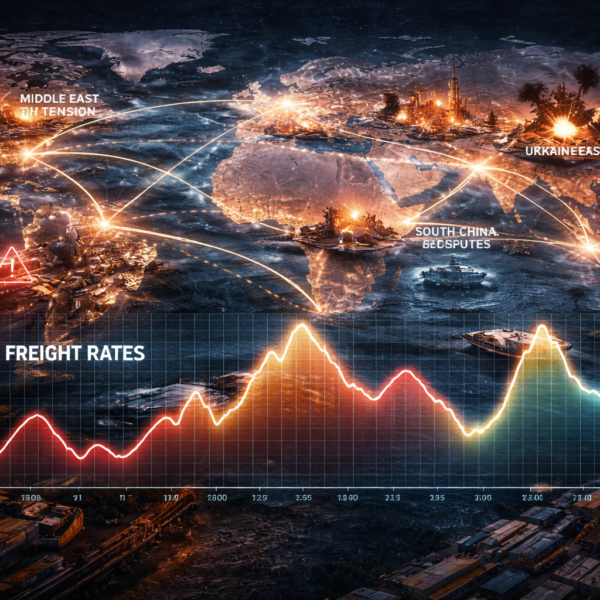
FuelEU Maritime is unlikely to be the last regional regulation affecting shipping emissions. As sustainability costs increasingly flow through freight rates, companies that proactively integrate emissions strategy into logistics planning will be better positioned to manage volatility.
Decarbonization is now part of core trade economics.
European Commission. (2025). FuelEU Maritime guidance document. https://transport.ec.europa.eu
Lloyd’s Register. (2025). FuelEU vs. IMO net‑zero framework. https://www.lr.org