

Key Points
- Select container services have resumed Red Sea/Suez transits, but routing decisions remain conditional and reversible
- Cape of Good Hope diversions continue to absorb effective global capacity
- Risk premiums, not distance alone, now determine network design
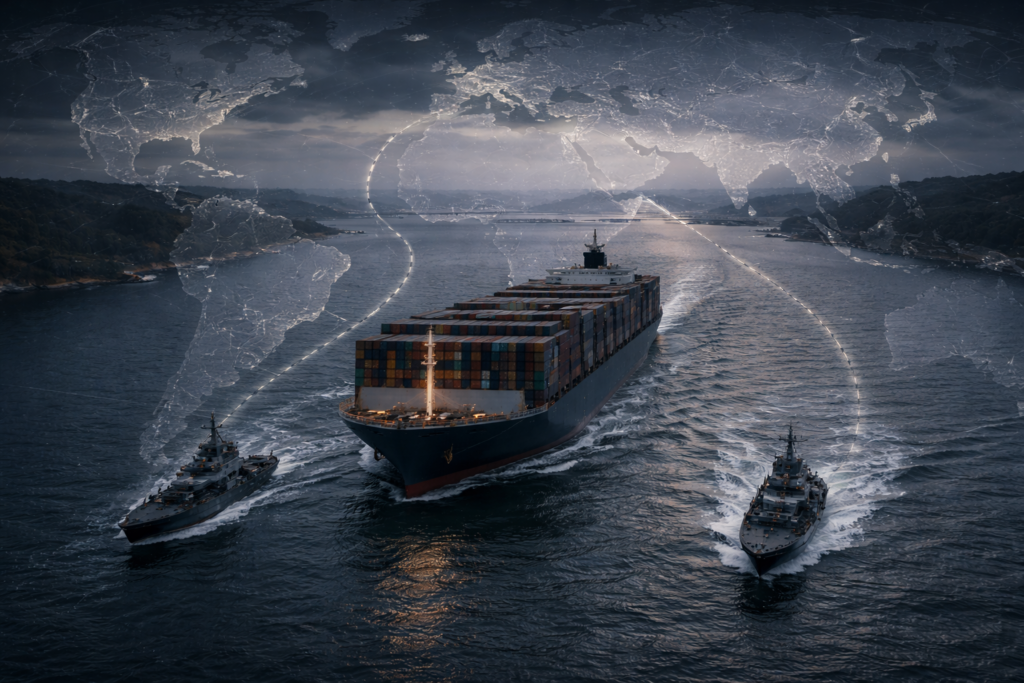
The Red Sea is no longer fully closed, but it is not fully open either. In early 2026, several major carriers cautiously resumed limited transits through the Bab el‑Mandeb Strait and Suez Canal after more than two years of disruption caused by Houthi attacks on commercial vessels. The shift has reignited debate over transit times, cost structures, and security risk in one of the world’s most critical trade corridors.
For logistics and global trade professionals, the question is no longer when shipping returns to the Red Sea, but under what conditions it makes sense to do so.




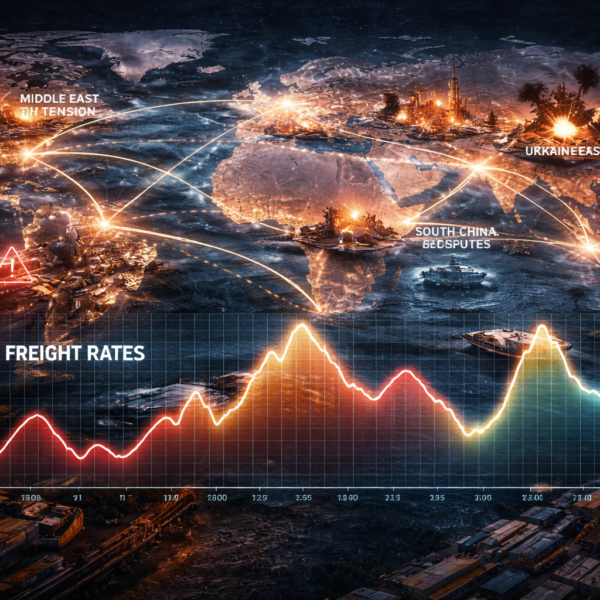
The End of Binary Routing Decisions
Before 2023, Asia–Europe routing was largely binary: Suez or Cape. That simplicity is gone.
In 2026, carriers are deploying hybrid network strategies, selectively routing high‑value or time‑sensitive cargo through the Red Sea while maintaining Cape of Good Hope routings for cost‑oriented services. Security conditions have stabilized but not normalized, and insurers continue to classify the region as high‑risk. [searates.com]
This has permanently embedded risk‑adjusted routing into carrier decision‑making.
Capacity Absorption Is the Hidden Cost
Even limited avoidance of the Red Sea has macro effects. Longer Cape routings add 10–14 days per round trip and absorb an estimated 5–7% of effective global container capacity, tightening markets far beyond Asia–Europe lanes. [suaidglobal.com]
This capacity drag helps explain why freight markets remain structurally firmer than pre‑pandemic norms, even amid fleet overcapacity headlines.
Insurance, Not Fuel, Sets the Floor
Fuel costs matter, but war‑risk premiums and insurance deductibles now shape routing economics. These costs fluctuate with geopolitical signaling, not operational efficiency, making them difficult to hedge contractually.
For shippers, this volatility complicates long‑term rate negotiations and undermines assumptions about transit reliability.
Industry Implications
- Network design must assume persistent volatility, not episodic disruption
- Procurement teams should treat transit time guarantees with skepticism
- Inventory planning must account for sudden re‑routing risk
Red Sea traffic may increase in 2026, but the corridor’s role has fundamentally changed. Security risk has become a permanent pricing input, not a temporary surcharge. The industry is unlikely to return to a single dominant routing model anytime soon.