
Key Points
- Temporary Section 122 tariffs are reshaping landed costs with limited planning windows.
- Expanded Section 301 investigations introduce product‑specific uncertainty.
- Compliance strategy is becoming as important as sourcing strategy.

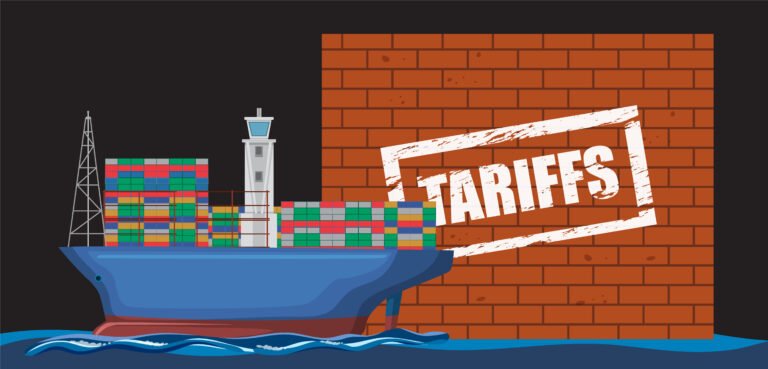
U.S. trade policy in 2026 is characterized less by permanence than by velocity. Recent actions—including the imposition of temporary Section 122 tariffs and renewed Section 301 investigations—are creating rapid swings in duty exposure that directly affect import planning (USTR, 2026).
Section 122: Temporary by Design, Disruptive in Practice
Invoked in early 2026, Section 122 authorizes broad import surcharges for up to 150 days unless extended by Congress (Grant Thornton, 2026). While legally temporary, the tariffs apply immediately, forcing importers to absorb or pass through costs with minimal lead time.



Section 301 Investigations Expand the Risk Map
The USTR has initiated multiple Section 301 investigations targeting structural overcapacity and forced‑labor enforcement across a wide range of countries and sectors (iContainers, 2026). These actions introduce uncertainty even before duties are imposed, complicating sourcing and compliance decisions.
Economic and Pricing Effects
According to analysis by the Budget Lab at Yale, the effective U.S. tariff rate in early 2026 stands at its highest level since the mid‑20th century, with measurable consumer price impacts (Budget Lab, 2026).
Industry Implications
- Importers must model multiple duty scenarios simultaneously.
- Customs brokers face heightened classification and origin scrutiny.
- Finance teams should prepare for refund, drawback, or protest workflows.
Forward Outlook
Trade policy volatility is unlikely to abate in 2026. Companies that treat tariffs as episodic events risk margin erosion. Those that institutionalize trade compliance into strategic planning will be better positioned to adapt.
U.S. Trade Representative. (2026). 2026 National Trade Estimate Report.
Grant Thornton. (2026). The Trump Administration’s New Tariff Road Map.
The Budget Lab at Yale. (2026). State of U.S. Tariffs: April 2026.
iContainers. (2026). U.S. Tariff Tracker.