
Key Points
- Panama’s dispute with Chinese-linked port operators has escalated into a broader geopolitical issue, with shipping delays and inspections affecting Panama‑flagged vessels.
- The situation introduces new political risk into one of the world’s most critical trade corridors, alongside existing operational constraints from drought.
- Logistics and trade stakeholders should prepare for regulatory scrutiny, routing volatility, and potential knock‑on effects across the Americas and Asia.
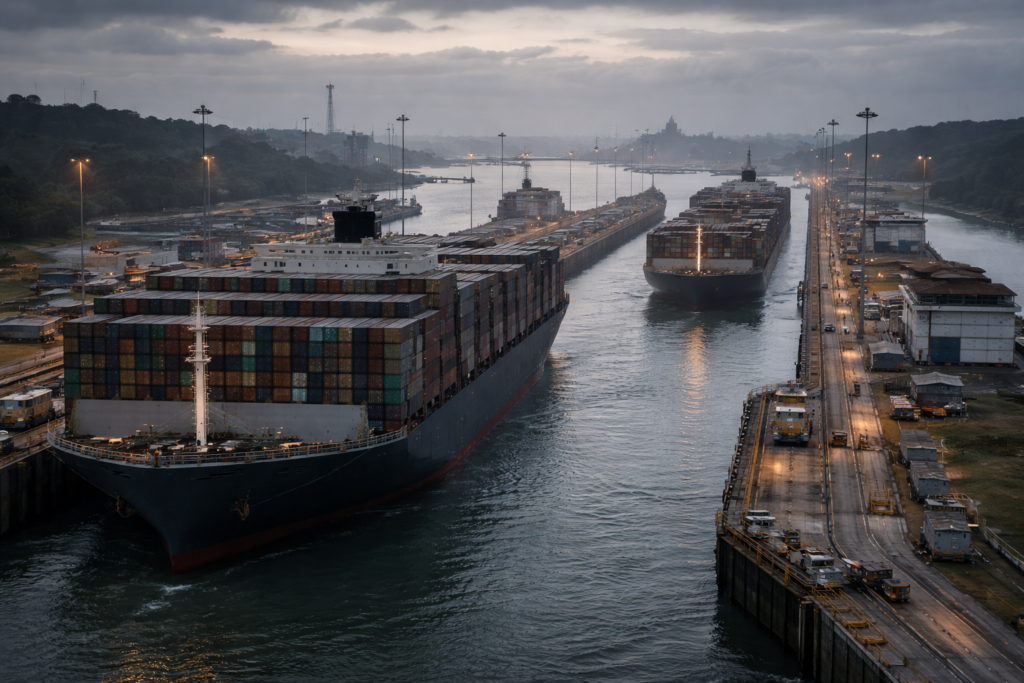
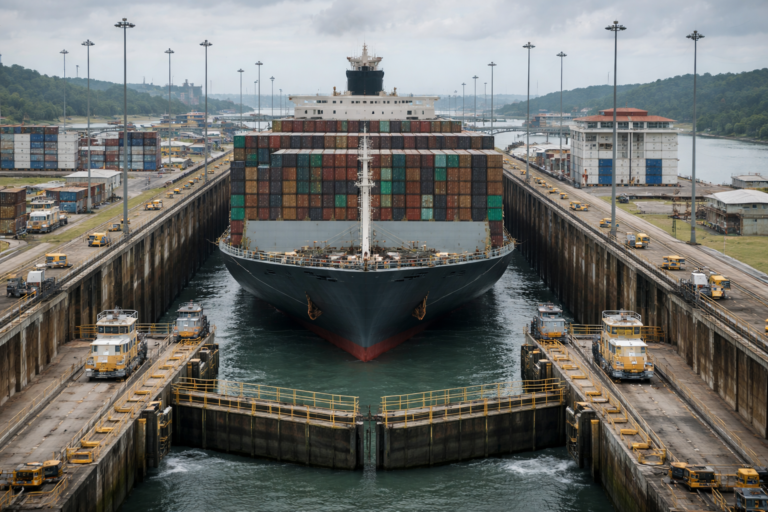
The Panama Canal, long viewed as a politically neutral artery of global commerce, is rapidly becoming a focal point in intensifying U.S. and China trade and security tensions. Over the past two weeks, a legal and diplomatic confrontation between Panama and China-linked port interests has begun to spill into day‑to‑day shipping operations, raising concerns about inspections, delays, and retaliatory measures affecting Panama‑flagged vessels.
This development arrives at a delicate moment for global logistics. The canal is already operating under drought-related draft and transit restrictions, limiting capacity and increasing costs. The added layer of geopolitical friction risks transforming a regional legal dispute into a systemic trade disruption.
What Changed: From Port Dispute to Shipping Risk
The immediate trigger was Panama’s decision earlier this year to revoke port operating concessions held by a subsidiary of Hong Kong–based CK Hutchison at two strategic ports near the canal. Panamanian courts ruled the concessions unconstitutional, prompting arbitration threats from the company and drawing sharp reactions from Beijing (CNBC, 2026).
In early April, the dispute escalated further. According to reporting by Reuters and the Associated Press, Chinese authorities significantly increased inspections and temporary detentions of Panama‑flagged vessels calling at Chinese ports, with Panama‑flagged ships accounting for nearly three‑quarters of all detentions in March (AP News, 2026; Reuters, 2026). While China denies the actions are retaliatory, U.S. officials have publicly accused Beijing of “bullying” and destabilizing global supply chains.
Panama, under visible diplomatic pressure from Washington, has pushed back, framing the issue as one of national sovereignty and commercial neutrality rather than alignment against China (Semafor, 2026).


Immediate Impact on Global Logistics
Flag Risk and Compliance Delays
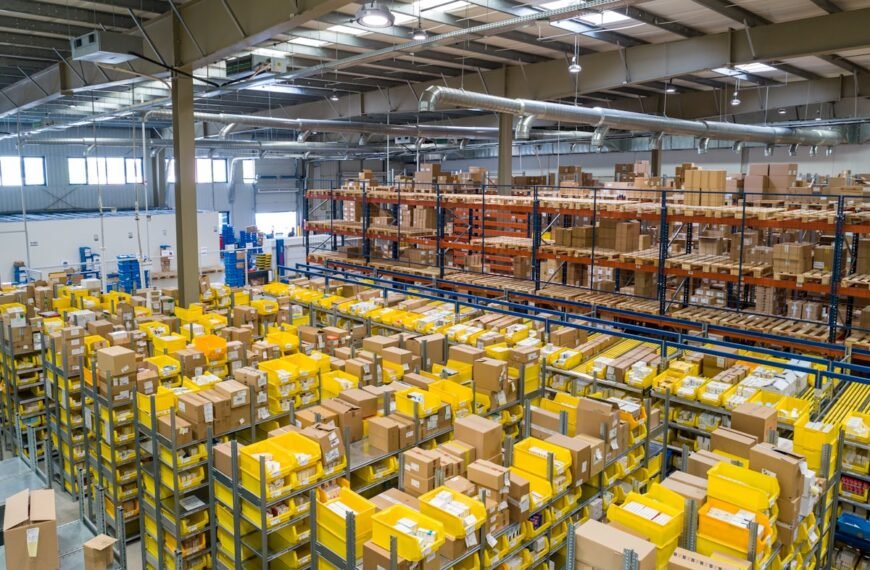
Panama is the world’s largest ship registry by tonnage. Increased scrutiny of Panama‑flagged vessels introduces compliance uncertainty for a vast segment of the global fleet. Even short inspection delays can disrupt tightly scheduled liner services and bulk trades, particularly on trans‑Pacific routes.
Operational Uncertainty at a Constrained Canal
The geopolitical tension compounds existing operational stress. Ongoing drought conditions have forced the Panama Canal Authority to maintain draft limits and manage auction-based transit slots, already raising costs and reducing flexibility for carriers (Panama Canal Authority, 2026). Any perception of political risk may prompt carriers to reassess routing or flagging strategies.
Insurance and Contractual Implications
Heightened political risk around the canal could feed into war‑risk premiums, insurance exclusions, and force‑majeure discussions, especially for long‑term contracts tied to predictable transit times through Panama.
Why This Matters Beyond Panama
This is not just a bilateral dispute. The canal handles roughly 3–4% of global maritime trade, with outsized importance for U.S. East Coast, Latin American, and Asia‑Americas lanes. If political signaling begins to affect vessel treatment, it challenges a foundational assumption of modern trade: that critical infrastructure remains insulated from great‑power rivalry.
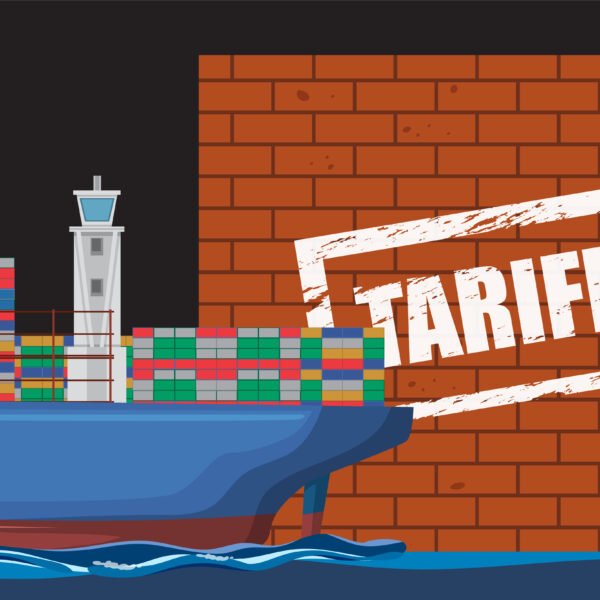
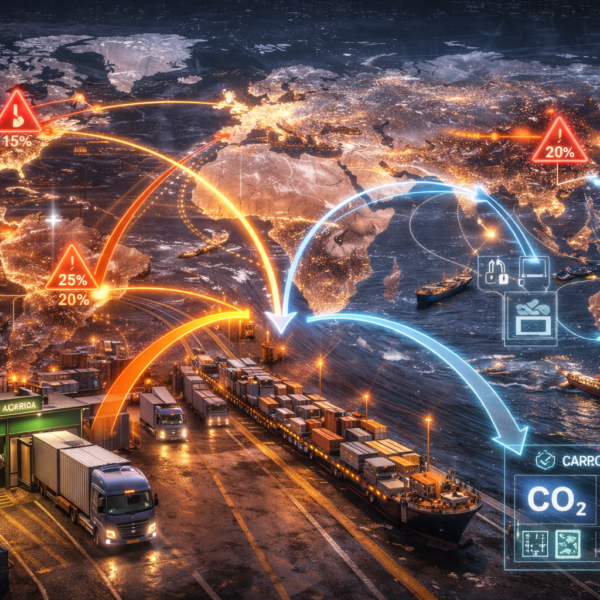
The episode also highlights a broader trend. Strategic logistics assets; ports, canals, energy corridors, are increasingly viewed through a national security lens rather than a purely commercial one. For supply chain planners, this means geopolitical risk is no longer confined to sanctions lists or tariff schedules; it is embedded in physical trade routes.
Industry Implications
For logistics and trade professionals, the near‑term implications are practical and immediate:
- Fleet and Flag Strategy: Owners may reassess flag exposure, especially for vessels heavily trading with China.
- Routing and Buffer Planning: Shippers should stress‑test scenarios involving canal delays layered on top of existing capacity constraints.
- Contract Flexibility: Expect renewed focus on clauses covering inspections, political risk, and regulatory delays.
- Monitoring Government Signals: Diplomatic statements—not just regulatory notices—are becoming operationally relevant.
What to Watch Next
Several factors will determine whether this remains a contained dispute or evolves into a broader trade disruption:
- China’s Inspection Patterns: If heightened scrutiny of Panama‑flagged ships persists or expands, confidence in flag neutrality could erode.
- Panama Canal Governance: Any further legal or administrative changes to port operations will be closely watched by carriers and investors.
- U.S. Policy Escalation: Additional U.S. measures framed around canal security could accelerate polarization around the route.
- Carrier Behavior: Early shifts in routing, flagging, or capacity deployment will be a key signal of how seriously the industry views the risk.
For now, the canal remains open—but its role as a geopolitically neutral chokepoint can no longer be taken for granted. For global trade, that is the real breaking news.
AP News. (2026, April 2). Rubio accuses China of ‘bullying’ for holding up Panama‑flagged ships. https://apnews.com/article/panama-china-united-states-ships-detained-b2bc0875404ff71f61b006c3be9e460e



CNBC. (2026, February 24). Panama ports deal in jeopardy as U.S.–China proxy battle intensifies. https://www.cnbc.com/2026/02/13/panama-ports-us-china-ck-hutchison-trump.html
Panama Canal Authority. (2026). Monthly Canal Operations Summary – March 2026. https://pancanal.com
Reuters. (2026, April 1). New mediators emerge in Iran war; shipping risks remain elevated. https://www.reuters.com
Semafor. (2026, April 9). Panama pushes back against China in canal row. https://www.semafor.com/article/04/09/2026/panama-pushes-back-against-china-in-canal-row