
Key Points
- Logistics labor shortages persist despite freight softening
- Demographics and skills gaps outweigh cyclical factors
- Workforce stability now affects service reliability

In theory, logistics labor shortages should ease when freight demand softens. In practice, that relationship has broken down. Despite pockets of slower freight volumes in 2025 and early 2026, labor constraints across trucking, warehousing, port operations, and equipment maintenance remain firmly in place.
This persistence reveals a critical shift: the logistics labor shortage is no longer cyclical, it is structural. For supply‑chain professionals, labor availability has become a hard constraint on capacity, reliability, and network performance, rather than a temporary cost pressure that fluctuates with market conditions.
Understanding this shift is essential, because labor constraints are now shaping how much freight can actually move, not just how much it costs.



Demographics Are the Foundation of the Problem
The most fundamental driver of the labor shortage is demographic. In the United States, the average age of truck drivers continues to rise, while entry rates remain insufficient to offset retirements (American Trucking Associations, 2025). Similar patterns exist across warehousing and port labor, where physically demanding roles struggle to attract long‑term workers.
Demographic forces operate on decades‑long timelines. Even aggressive recruitment efforts cannot quickly replace an aging workforce. This reality limits the effectiveness of short‑term fixes such as wage increases or signing bonuses.
In other words, the labor pool itself is shrinking, not merely reallocating.
Skills Matter More Than Headcount
Modern logistics operations require far more than basic labor availability. Automation, safety regulations, warehouse management systems, and increasingly sophisticated equipment have raised skill requirements across the sector.
Forklift operators now manage complex inventory systems. Port workers interact with semi‑automated cranes and terminal operating systems. Truck drivers navigate electronic logging, compliance platforms, and advanced vehicle technology.
This creates a paradox: technology improves productivity but raises dependence on skilled labor rather than eliminating it. The shortage is therefore not just about people, it is about qualified people.
Warehousing and Ports Face a Different Labor Equation
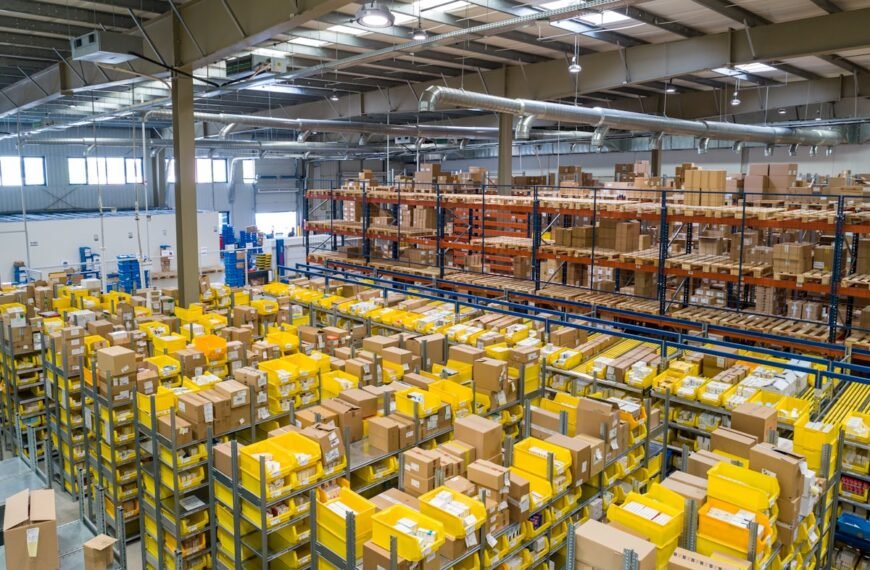
Warehousing and port operations highlight the structural nature of the problem. E‑commerce has permanently increased throughput expectations, while just‑in‑time models have compressed error tolerance.
At the same time, labor competition has intensified. Warehouses compete not only with other logistics employers, but with construction, manufacturing, and even service sectors that may offer more predictable schedules or less physical strain.
Ports face additional complexity, balancing modernization efforts with labor agreements and training requirements. Workforce instability at terminals quickly translates into vessel delays, congestion, and cascading network effects.
Reliability, Not Cost, Is the Primary Impact
The most important consequence of labor shortages is not wage inflation, it is reliability degradation.
Labor instability manifests as:
- Missed pickup and delivery appointments
- Lower equipment utilization
- Increased dwell time at terminals and yards
- Higher incident and safety risk
These effects compound across networks. A single missed appointment can disrupt production schedules, inventory positioning, and downstream service commitments.
As a result, labor availability has become a core determinant of effective capacity, not just a line item in operating costs.
Shippers Are Being Forced to Rethink Carrier Selection
Historically, shippers evaluated carriers primarily on price, coverage, and equipment. In today’s environment, workforce stability is emerging as a differentiator.
Carriers with lower turnover, stronger training programs, and better labor relations often deliver more consistent service, even if their rates are higher. Conversely, low‑cost providers with unstable labor pools may struggle to meet commitments during periods of disruption.
This shifts procurement conversations away from spot pricing and toward long‑term reliability.
Industry Implications
For logistics and supply‑chain professionals, the structural labor shortage has several concrete implications:
- Workforce strategy is now a capacity lever, not an HR function
- Carrier evaluations must include labor stability and turnover metrics
- Wage pressure should be treated as permanent, not transitory
- Technology investments must be paired with training and retention
Ignoring labor realities increasingly results in service failure rather than cost savings.
There is no quick resolution to logistics labor shortages. Demographic trends, skills requirements, and workforce expectations suggest that constraints will persist through the decade.
Organizations that treat labor as infrastructure by investing in training, retention, and operational alignment will be better positioned to deliver reliable service in volatile markets. Those that assume labor constraints will “normalize” risk building networks that look efficient on paper but fail under pressure.
American Trucking Associations. (2025). U.S. truck driver shortage analysis. https://www.trucking.org
U.S. Bureau of Labor Statistics. (2025). Transportation and warehousing workforce data. https://www.bls.gov