
Key Points
- The effective closure of the Strait of Hormuz has sharply increased energy, shipping, and insurance costs across global supply chains.
- Ocean and air freight markets are reacting through rerouting, capacity tightening, and emergency surcharges.
- Logistics and trade professionals must prepare for prolonged volatility, not a short-term disruption.
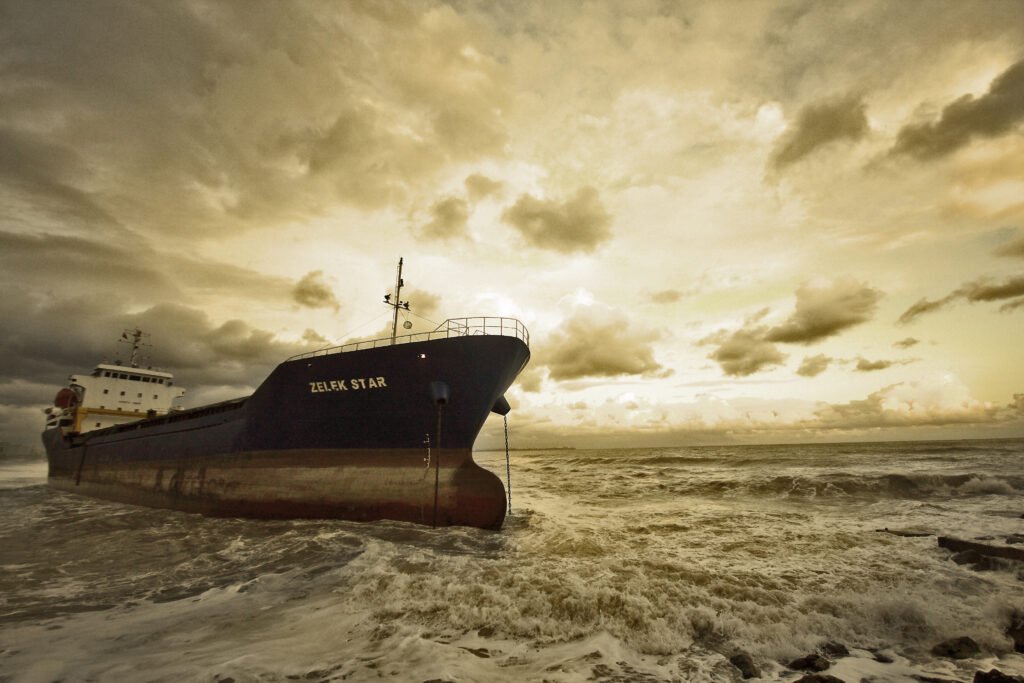
Global trade entered a new phase of instability this month as geopolitical tensions in the Middle East escalated into a direct disruption of one of the world’s most critical maritime chokepoints. On April 12, 2026, the United States announced a naval blockade of the Strait of Hormuz following the collapse of ceasefire talks with Iran, effectively halting normal commercial traffic through a corridor that typically handles roughly 20% of the world’s seaborne oil trade (Reuters, 2026).
For logistics and global trade professionals, the implications are immediate and far-reaching. Energy prices have surged, shipping routes are being redrawn in real time, and risk premiums are rising across transportation modes. Unlike episodic disruptions seen in recent years, the Hormuz crisis strikes at the structural foundations of global trade, with consequences extending well beyond the energy sector.
Why the Strait of Hormuz Matters to Global Trade
The Strait of Hormuz is not merely an energy artery; it is a systemic stabilizer for global logistics. Approximately 20 million barrels of oil per day and significant volumes of liquefied natural gas (LNG) normally transit the strait, supporting industrial production, transportation, and manufacturing worldwide (International Energy Agency, as cited by Reuters, 2026).
Since early March, Iran had already imposed selective tolls and restrictions on vessel passage. The April 12 U.S. decision to enforce a full blockade formalized what markets had already begun to price in: that Hormuz was no longer a reliable transit route. Major insurers withdrew coverage, carriers suspended bookings, and charter rates spiked almost overnight.
According to Reuters, Brent crude prices more than doubled from January lows, exceeding $110 per barrel by early April, while diesel prices climbed toward record levels in key importing economies (Reuters, 2026). For logistics operators, fuel is not a secondary input cost, it is a primary driver of freight economics across ocean, air, and inland transportation.

Immediate Impact on Shipping and Freight Markets
Ocean Freight: Rerouting and Capacity Absorption
Ocean carriers have responded by rerouting vessels around the Cape of Good Hope and avoiding Persian Gulf ports entirely. While this strategy preserves service continuity, it comes at a cost. Transit times on Asia–Europe and Asia–U.S. East Coast lanes have lengthened by 10 to 14 days, absorbing vessel capacity and tightening equipment availability elsewhere (C.H. Robinson, 2026).
Industry estimates suggest that up to 8–10% of global container capacity has been temporarily sidelined due to delayed or stranded vessels in the Gulf region (C.H. Robinson, 2026). Spot rates have begun to reflect this constraint, with emergency bunker and war-risk surcharges increasingly layered on top of base freight rates.
Air Freight: Fuel Volatility and Mode Shifts
Air cargo has not been immune. Jet fuel prices have risen sharply alongside crude, driving higher all-in air freight rates at a time when capacity remains structurally constrained. Some shippers have shifted high-value or time-sensitive cargo from ocean to air to offset extended transit times, further pressuring rates on Asia–U.S. and Europe–U.S. lanes (J.M. Rodgers, 2026).
Insurance and Compliance Costs
War-risk insurance premiums for vessels operating anywhere near the Gulf have increased multiple times over pre-crisis levels. Even shipments routed well outside the conflict zone are seeing higher premiums as insurers reprice systemic risk. For importers, these costs are cascading into landed cost calculations alongside existing tariff and compliance burdens.
Energy Shock and Secondary Supply Chain Effects
The logistics impact of the Hormuz disruption cannot be separated from its energy consequences. Elevated fuel prices are feeding directly into trucking, rail, and intermodal costs, compressing margins for carriers and shippers alike. According to market analysts, diesel prices in the U.S. and Europe are approaching levels last seen during the 2022 energy crisis, with limited near-term relief in sight (Reuters, 2026).
Manufacturers are already reporting slower supplier deliveries and higher input costs, particularly for energy-intensive goods such as chemicals, metals, and plastics. These pressures are resurfacing familiar dynamics from earlier supply chain crises: longer lead times, increased safety stock, and renewed emphasis on supplier diversification.
Industry Implications: What Logistics Leaders Should Be Doing Now
For logistics and global trade professionals, the Hormuz crisis reinforces a critical lesson: geopolitical risk is no longer episodic, it is structural.
Key implications include:
- Contract Strategy: Shippers should expect shorter rate validity periods, more frequent surcharge adjustments, and greater resistance to fixed-price agreements.
- Network Design: Overreliance on single corridors or energy-sensitive modes is becoming a liability. Regionalization and optionality are moving from theory to necessity.
- Risk Management: Trade compliance, insurance review, and scenario planning must be integrated into logistics decision-making, not treated as downstream functions.
This is not a moment for reactive cost-cutting alone. Organizations that treat the current disruption as a temporary anomaly risk being unprepared for what may be an extended period of elevated volatility.
What to Watch Next
Several indicators will shape the next phase of this disruption:
- Duration of the Blockade: The economic impact scales exponentially with time. A disruption measured in weeks is manageable; one measured in months is transformational.
- Carrier Capacity Decisions: Continued blank sailings or service suspensions could amplify rate volatility even if demand remains muted.
- Policy Spillovers: Energy-driven inflation may influence monetary policy, trade enforcement, and additional tariff or subsidy measures in major economies.
UNCTAD has already warned that geopolitical fragmentation and rising trade costs are likely to slow global trade growth in 2026, even before accounting for a prolonged Hormuz closure (UNCTAD, 2026). The current crisis may accelerate that trajectory.
The Strait of Hormuz disruption is not just another logistics challenge, it is a stress test for the resilience of global trade itself. As energy, shipping, and insurance markets recalibrate to a higher-risk baseline, logistics professionals are being forced to navigate an environment where stability is no longer the default assumption.
For industry stakeholders, the question is no longer whether volatility will persist, but how effectively organizations can adapt their networks, contracts, and risk frameworks to operate within it.
C.H. Robinson. (2026). April 2026 Ocean Freight Market Update.
Reuters. (2026, April 10–12). Middle East conflict and Strait of Hormuz shipping disruptions.
UNCTAD. (2026). Global Trade Update: April 2026.